Neil Gaiman
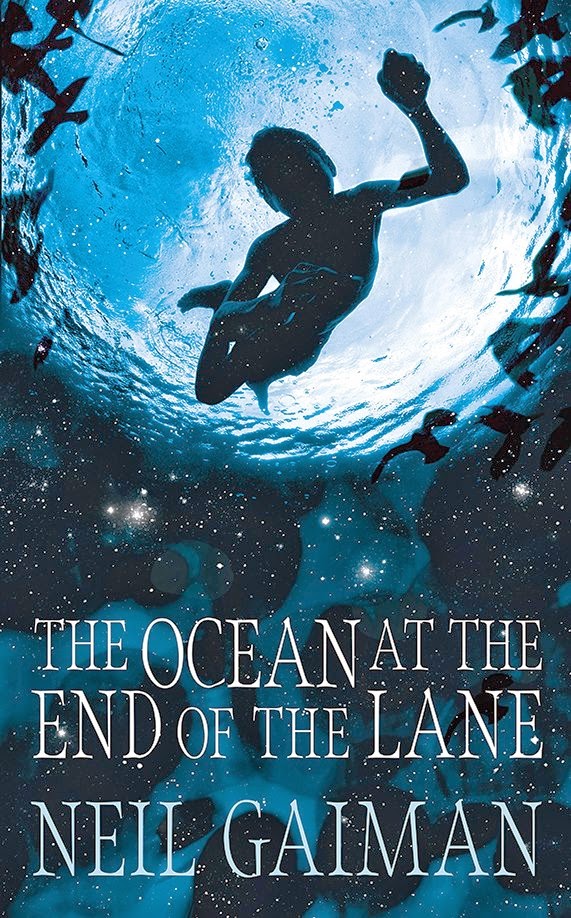
Master of many literary crafts Neil Gaiman has returned in top form with his highly anticipated, gripping latest novel The Ocean at the End of
the Lane.
Neil Gaiman has perfected many genres of literature during the course of his career, including the renowned Sandman series of graphic novels, his children books, and his utterly brilliant Young Adult novels Coraline and The Graveyard Book.
Showing posts with label review. Show all posts
22 July 2014
2 January 2014
School of Seven Bells - Live Review
I was deeply saddened and shocked to hear of the passing of the great Benjamin Curtis in the last few days and I realised how lucky I was to have been able to see him perform with School of Seven Bells when they played Dublin a couple of years ago. Here is my review of the night.
An air of a well kept secret swept across the admiring audience when New York trio School of Seven Bells took to the stage of a packed Whelans on a Monday night. It seemed almost wrong that a band like this were playing such a small venue with such a mature sound and likeability.
28 October 2013
Book Review: The Hunger Games Trilogy
The Hunger Games Trilogy: The Hunger Games; Catching Fire; Mockingjay
Suzanne Collins
Author of the Hunger Games Trilogy Suzanne Collins has said that she got the idea for the story after one night tiredly flicking through channels on her TV. On one channel was a Survivor type reality TV show, while another had scenes of war footage. The two shows melded into one and an idea was born.
The Hunger Games novels, The Hunger Games, Catching Fire and Mockingjay, are set in a dystopian not-so-distant future. In some ways reminiscent of the terror in George Orwell's 1984, mixed with the cult Japanese movie Battle Royale and Golding's Lord of the Flies; there are 12 districts of the country known as Panem (based on North America), who live in poverty and are ruled by the wealthy Capitol.
Suzanne Collins
Author of the Hunger Games Trilogy Suzanne Collins has said that she got the idea for the story after one night tiredly flicking through channels on her TV. On one channel was a Survivor type reality TV show, while another had scenes of war footage. The two shows melded into one and an idea was born.
The Hunger Games novels, The Hunger Games, Catching Fire and Mockingjay, are set in a dystopian not-so-distant future. In some ways reminiscent of the terror in George Orwell's 1984, mixed with the cult Japanese movie Battle Royale and Golding's Lord of the Flies; there are 12 districts of the country known as Panem (based on North America), who live in poverty and are ruled by the wealthy Capitol.
14 October 2013
Book Review: The Forced Redundancy Film Club
The Forced Redundancy Film Club
Brian Finnegan
Brian Finnegan's debut The Forced Redundancy Film Club is very much a novel of Ireland in 2011. It opens with Katherine Casey, the novel's protagonist of sorts, waking up on her birthday and going to the job she has worked hard and ruthlessly to get, only to find that her name has been added to the list of people in her office being made redundant - a list that she was asked to compile.
Her whole world falls apart as she and three of her now former work colleagues; Jamie the only gay in the office who is a lot more concerned about keeping his affair a secret from his partner Andrew than losing his job; Lisa, who now faces the trials of being a stay at home mum to her three boys; and Martin, whose battle with the bottle is a lot more of a worry than losing the job he didn't care much for anyway - all of whom know that Katherine added their name to the list - go to the pub to drown their sorrows.
After 'the one too many', an idea is formed from the minds of this motley crew. They decide to meet once a month to watch their favourite films. The person hosting gets to choose. With much protestation from other members of the group, Katherine is invited along by the very likable Martin, who not-so-secretly holds a flame for her after a very brief dalliance at the office Christmas party. In turn, Katherine insists on inviting Alice, the unfortunate, unlikable P.A. to the boss who has just fired them... She hasn't lost her job, but she has just found out that her mother has died.
The group seems like a disaster from the off, with endless clashes between the wildly differing personalities. Finnegan gives each character subchapters to get a proper insight into their story and what's going on in their own lives; how their redundancy and relationships from within the group and outside it are affecting them. As time goes on, the movies chosen by the individuals mirror some form of internal struggle they are experiencing but also show them a truth that helps them in their various predicaments.
The Forced Redundancy Film Club is a smart novel that contains just the right amount of comedy and tragedy to make it enjoyable for anyone to read. The film theme throughout, beginning quite aptly with Casablanca - "I think this is the beginning of a beautiful friendship" - and ending even more aptly with It's A Wonderful Life, is both original and effective. His novel gives the reader a cutting insight into the lives of five very typical Irish individuals, from exhausted mother of three to the spinster orphan with no social skills, and pulls it off perfectly.
The beauty of The Forced Redundancy Film Club is that it can - like all classic movies - be enjoyed, not specifically by just women or just men, but by anyone who loves a good story.
An impressive debut.
(Originally written for entertainment.ie)
Brian Finnegan
Brian Finnegan's debut The Forced Redundancy Film Club is very much a novel of Ireland in 2011. It opens with Katherine Casey, the novel's protagonist of sorts, waking up on her birthday and going to the job she has worked hard and ruthlessly to get, only to find that her name has been added to the list of people in her office being made redundant - a list that she was asked to compile.
Her whole world falls apart as she and three of her now former work colleagues; Jamie the only gay in the office who is a lot more concerned about keeping his affair a secret from his partner Andrew than losing his job; Lisa, who now faces the trials of being a stay at home mum to her three boys; and Martin, whose battle with the bottle is a lot more of a worry than losing the job he didn't care much for anyway - all of whom know that Katherine added their name to the list - go to the pub to drown their sorrows.
After 'the one too many', an idea is formed from the minds of this motley crew. They decide to meet once a month to watch their favourite films. The person hosting gets to choose. With much protestation from other members of the group, Katherine is invited along by the very likable Martin, who not-so-secretly holds a flame for her after a very brief dalliance at the office Christmas party. In turn, Katherine insists on inviting Alice, the unfortunate, unlikable P.A. to the boss who has just fired them... She hasn't lost her job, but she has just found out that her mother has died.
The group seems like a disaster from the off, with endless clashes between the wildly differing personalities. Finnegan gives each character subchapters to get a proper insight into their story and what's going on in their own lives; how their redundancy and relationships from within the group and outside it are affecting them. As time goes on, the movies chosen by the individuals mirror some form of internal struggle they are experiencing but also show them a truth that helps them in their various predicaments.
The Forced Redundancy Film Club is a smart novel that contains just the right amount of comedy and tragedy to make it enjoyable for anyone to read. The film theme throughout, beginning quite aptly with Casablanca - "I think this is the beginning of a beautiful friendship" - and ending even more aptly with It's A Wonderful Life, is both original and effective. His novel gives the reader a cutting insight into the lives of five very typical Irish individuals, from exhausted mother of three to the spinster orphan with no social skills, and pulls it off perfectly.
The beauty of The Forced Redundancy Film Club is that it can - like all classic movies - be enjoyed, not specifically by just women or just men, but by anyone who loves a good story.
An impressive debut.
(Originally written for entertainment.ie)
Subscribe to:
Posts (Atom)


